

The WEST (Water Enhancements through Sustainable Treatment) project team has been bringing its environmental message directly into the heart of the Garrison community (near Lough Melvin County Fermanagh) through recent outreach events with St. Martin’s Primary School and the local angling community.
The WEST project is supported by PEACEPLUS, a programme managed by the Special EU Programmes Body (SEUPB). The initiative, which is being undertaken by NI Water working in partnership with Uisce Éireann, includes sustainable upgrades to wastewater treatment works in Belleek and Garrison (County Fermanagh), Ballybay (County Monaghan), and Blacklion (County Cavan), alongside extensive environmental modelling across the wider Erne catchment. PEACEPLUS is co-funded by the European Union, the Government of the United Kingdom, the Government of Ireland, and the Northern Ireland Executive.
As part of the outreach programme, Primary 5 and Primary 6 pupils from St. Martin’s Primary School took part in an interactive classroom workshop exploring the journey of wastewater and the simple actions that can help protect the environment. Through engaging activities, pupils learned what should and should not be flushed down toilets or poured down kitchen sinks, reinforcing key messages around responsible waste disposal.
Speaking during the school visit, Louisa Sinclair, Network Performance Manager at NI Water and WEST Modelling Lead, highlighted the important role that local communities can play in supporting wastewater infrastructure:
“As part of the WEST project, we are developing a new nature-based wastewater treatment system in Garrison that will help protect the local environment for generations to come. With the site located close to St. Mary’s Devenish GAC, we wanted to use this opportunity to engage with local children and show how the everyday choices we all make at home can help keep the wastewater network working effectively.
“Simple actions, such as only flushing the three Ps – pee, poo and toilet paper – and keeping items such as baby wipes, cotton buds, dental floss, nappies, sanitary products and paper towels out of the toilet can help prevent blockages. We also encourage people to keep fats, oils and grease out of the sink, as these can build up in pipes and cause serious problems.
“By helping young people understand how everyday habits can protect our wastewater infrastructure, we are supporting the long-term success of this sustainable treatment system while helping to safeguard local waterways for many years to come.”
The WEST project team also donated a water butt to the school, along with a timber planter and bug hotel made from recycled materials by Belleek Men’s Shed. The items will support St. Martin’s ongoing sustainability and biodiversity initiatives.
Speaking about the visit, Principal of St. Martin’s Primary School, Mairéad Gormley, said:
“We were delighted to welcome the WEST outreach team to St. Martin’s Primary School. Our P5 and P6 pupils thoroughly enjoyed the engaging classroom presentation, learning about the journey of wastewater and the importance of knowing what should and should not be flushed.
“With the weather not favourable for a site visit, it was great to have the opportunity to experience the new sustainable nature-based wastewater treatment works at Garrison through virtual reality (VR) goggles. This innovative approach brought the learning to life for the children in a truly memorable way.
“Having recently had our Green Flag status renewed once more, we are grateful for the water butt, along with the timber planter and bug hotel made by the Men’s Shed in Belleek. These additions will build on our existing commitment to sustainability and biodiversity, enabling our pupils to further support environmental initiatives in Garrison alongside the WEST team.
“Overall, the event was an educational and enriching experience for our pupils and we look forward to engaging further with the WEST team as the Garrison project progresses.”
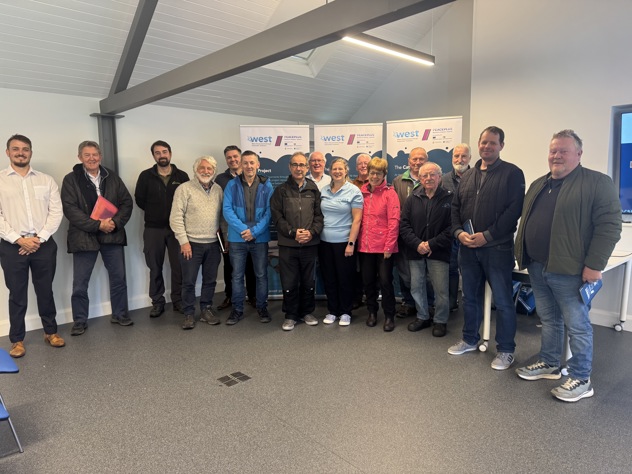
As part of its wider outreach programme, the WEST project team also hosted a “Talk and Tour” event in collaboration with the Garrison and Lough Melvin Anglers Association. Invitations were extended to neighbouring angling clubs in Rossinver and Kinlough, County Leitrim, providing local stakeholders with an opportunity to learn more about the project on a cross-border basis and share their views on the future protection of the catchment.
Seamus McGuinness, committee member of the Garrison and Lough Melvin Anglers Association, said:
“We are encouraged to see this sustainable project for Garrison, which will help support the future development of the village. Importantly, when completed, the upgrade of the Wastewater Treatment Plant should help prevent untreated wastewater discharges into Lough Melvin.
“Going forward, we are keen to see how we can continue to help improve both water quality and fish habitats in the Melvin catchment. We will continue to engage with the WEST team and support the work of the legacy modelling strategy, which will help shape future water quality improvements in the area.”
During the site visit, the WEST team outlined how the innovative nature-based treatment system will operate, explaining that the facility’s four reed beds will use natural filtration processes to treat wastewater sustainably.
The WEST project outreach programme will continue to engage with schools, community groups and stakeholders across the region, helping to build awareness of sustainable wastewater management, encourage responsible behaviours and support the long-term protection of local waterways.
ENDS
For further information please contact press.office@niwater.com
Notes to editors:
The Special EU Programmes Body (SEUPB) is a North-South Body with the statutory remit for managing EU funding programmes within Northern Ireland and the border counties of Ireland. The PEACEPLUS Programme has been designed to promote peace and prosperity across Northern Ireland and the border counties of Ireland and has a total value of €1.14bn. PEACEPLUS is co-funded by the European Union, the Government of the United Kingdom of Great Britain and Northern Ireland, the Government of Ireland, and the Northern Ireland Executive.
Further information on the WEST project can be found at www.west-project.com