
Understanding Raw Water Quality: Why it Matters for Northern Ireland
Raw water is untreated water from natural sources like rivers, lakes, and reservoirs. It is the foundation of our drinking water supply and a vital part of our ecosystem. The quality of raw water directly affects public health, biodiversity, and the long-term sustainability of our water services.
Everyone has a part to play in protecting the health of our waterways. We all generate wastewater - from our homes, schools, factories and businesses. NI Water’s role is to collect this wastewater and carry it to our wastewater treatment works for processing before returning the treated water back into the environment. There are actions we can all take to protect the vital water environment in Northern Ireland – especially Lough Neagh, one of Northern Ireland’s most important water bodies.
Pollution Breakdown
The relative contributions of phosphorus to Lough Neagh from agriculture, wastewater and other sources are complex and continue to be the subject of ongoing scientific research and assessment. NI Water fully owns its proportion of the overall loading, noting that there are strict guidelines set by NIEA that it must follow.
The evidence base in this area is evolving, with an updated report expected later this year. Lough Neagh Report and Action Plan | Department of Agriculture, Environment and Rural Affairs
NI Water’s main focus in relation to Lough Neagh is to continue to work constructively with regulators, local government, the scientific community and other stakeholders to ensure that identified actions are delivered to work toward improving the condition of Lough Neagh.
Impact of Wastewater discharges on Raw Water
Phosphorus (P) in wastewater typically comes from several key sources, both domestic and industrial. Within domestic sources, P is derived mainly from human waste (i.e. urine and faeces) and from food waste, especially disposal down the sink of scraps of foods rich in protein and additives. To a lesser degree, other chemical products used in the home contribute to presence of P in wastewater.
What is Phosphorus
Phosphorus is an essential element for all living organisms. However, If there is too much of it, it can cause environmental issues.
In wastewater, phosphorus is present mainly in 3 forms:
- Orthophosphate (inorganic, dissolved form)
- Polyphosphate (used in detergents and cleaning agents)
- Organic phosphorus (from human waste, food residues)
When phosphorus is discharged into rivers, lakes and coastal waters it can lead to eutrophication (nutrient enrichment) causing excessive growth of algae and aquatic plants. In turn, this depletes the oxygen in the water, harming fish and other aquatic life. To mitigate wastewater contributing to the phosphorus contribution in waterbodies, strict regulations on the amount of P that can be released from the larger wastewater treatment works is in force in Northern Ireland. For smaller works, the P level is typically reduced by circa 20% through the natural biological processes at the treatment works.
FAQs - Wastewater Treatment Compliance and Regulation
Compliance is assessed by the Northern Ireland Environment Agency (NIEA), which sets strict environmental standards (called consents) for each of our 1,030 wastewater treatment works. These standards ensure that treated wastewater returned to the environment is safe and meets environmental protection goals.
For larger works (serving over 250 people), compliance is determined through:
- Accredited sampling and laboratory testing of treated effluent.
- Comparison of results against consented parameter limits.
- Announced sampling visits, whereby operation teams are aware of dates when samples will be taken.
For smaller works (serving fewer than 250 people), NIEA conducts visual inspections and assesses compliance based on site conditions.
NI Water has responsibility for sampling, testing and reporting results to NIEA for wastewater treated effluent. This is known as the Operator Self-Monitoring (OSM) scheme and is subject to strict rules regarding quality management systems, accreditation standards and external auditing by NIEA. OSM operates across the UK water industry.
NIEA is reforming how wastewater compliance is assessed to align with UK-wide standards. Key changes include:
- Unannounced sampling: Moving from announced to unannounced sampling schedules, whereby the operational teams will not have any foresight of the dates when sampling will occur.
- Assessment of priority substances: Including industrial chemicals, pesticides, heavy metals, and pharmaceuticals.
- New flow and EDM (Event Duration Monitoring) standards:
- Mandatory installation and certification of flow meters and EDMs.
- Routine flow data reporting to NIEA.
- New metrics for flow rates, spill occurrences, and equipment performance.
- Near real-time reporting of spills in bathing water catchments (to inform risk to bathers)
These changes aim to provide a more detailed and holistic picture of the environmental impact of wastewater discharges.
Currently, 239 works, i.e. the larger works serving over 250 population equivalent(PE), are included in the performance compliance assessments. This includes both NI Water operated works and 5 works operated under Public Private Partnerships (PPP). The PE served by each works is reviewed annually to determine if smaller works have grown enough to be included.
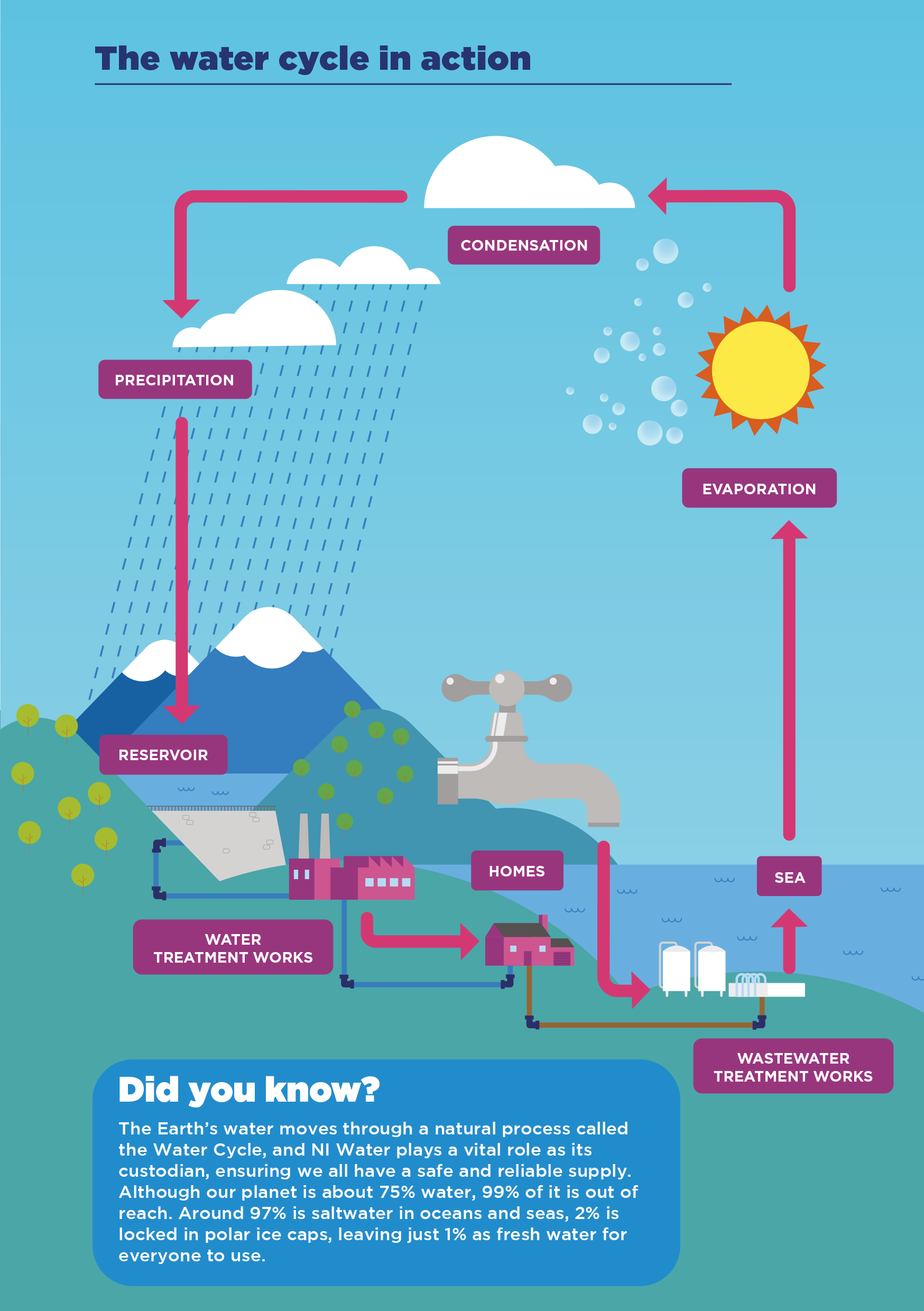
Following conveyance of the wastewater to the wastewater treatment works, it will go through various stages of treatment to purify before ultimately being discharged as treated effluent back to the water environment, as permitted under the consents issued by NIEA. This is a natural part of the water cycle, which keeps Earth’s water supply moving and renewing. The solids captured during the purification process (known as wastewater sludge) are collected and disposed off via incineration, eliminating the link of P contribution from wastewater sludge to the environment.
NI Water has reviewed DAERA’s Nutrient Action Plan (NAP) and whilst primarily intended for agricultural activity and outside our remit to respond on such proposals, we wish to provide the following comments.
As a Company, we deliver high quality drinking water to all our customers and return their wastewater safely to the environment. We welcome the renewed focus on water quality improvement and recognise the critical role we must all play in enhancing the health of our water bodies. However, robust scientific evidence demonstrates that this cannot be achieved in isolation.
The consultation rightly highlights the collective responsibility across sectors - no single body can deliver the scale of change required alone to protect our precious water resources. We all need to act, both individually and together. To this end we are already working with others in our water catchments and have a proven history of working in partnership, including with the agricultural industry, to implement measures in the catchment to improve our raw drinking water at source.
NI Water has also long acknowledged the environmental challenges we face and has consistently raised concerns about the critical state of Northern Ireland’s wastewater infrastructure and the limitations it places on both environmental progress and economic development.
Whilst the NAP is focused on the prevention of pollution from agricultural sources, the River Basin Management Plan (RBMP) for Northern Ireland, published on 13th June 2025, looks at water quality in a wider context. The RBMP calls out the role that NI Water has to play in protecting and improving water quality. Within the programme of measures the reduction of nutrients from sewage is specifically mentioned and NI Water will continue to work with its delivery partners AFBI and DAERA in working towards this outcome.
The NAP consultation brings renewed attention to these issues, but it also intersects with wider policy challenges - most notably the SORPI arrangements. NI Water agrees - these legacy rules are no longer tenable. NI Water supports their removal, but doing so without a clear, funded transition plan risks economic impact- halting housing development and undermining public confidence.
NI Water remains committed to creating the circumstances in which SORPI is no longer necessary, but such a transition requires aligning not only that aspiration and budgetary reality, but also the Programme for Government’s ambitions to expand the supply of public and private housing and the development of the economy. Unilateral withdrawal will imperil not just those objectives, but also, perversely, diminish the funding available to improve the environment.
We understand the issues. We have a comprehensive, financial regulator-approved plan to address them. But we must be clear: without the necessary investment, we will fail to meet even our current environmental standards. This will have serious consequences for Northern Ireland’s environment, economy, and public health.
We are committed to transparency. Our data and plans are publicly available, and we continue to engage with stakeholders to ensure a shared understanding of the challenges and the difficult decisions ahead. We urge all parties to work together to deliver a sustainable, funded path forward in order to enhance and protect our precious water resources.
SORPI stands for ‘Statement of Regulatory Principles and Intent’. It was introduced in 2007 in Northern Ireland to assist the newly formed NI Water to manage historic underinvestment in the region’s wastewater infrastructure.
Historic Context for the Establishment of SORPI
In 2007, NI Water inherited assets that were outdated and unable to meet the environmental standards set by both UK and European regulations. Recognising that immediate compliance was unrealistic without significant capital investment, the Environmental Regulator (now Northern Ireland Environment Agency, NIEA), together with other government departments and regulators, established SORPI as a temporary regulatory framework. Its purpose was to provide a clear, proportionate approach to environmental enforcement, focusing on management failures rather than penalising NI Water for inherited deficiencies.
SORPI was set up to allow NI Water time to upgrade its infrastructure, with enforcement actions linked to progress on capital works and funding availability. This arrangement was intended to protect public health and the environment while enabling property development and economic growth, all under the expectation that sufficient investment would eventually close the gap in wastewater standards.
What is the current position with SORPI?
In April 2025, NIEA opened consultation with NI Water regarding their intention to withdraw from SORPI. A response to this consultation was made in July 2025 and highlighted the interconnected impacts on housing development, economic growth and environmental compliance in NI. NI Water remains open to continuing engagement with NIEA on the review of SORPI and broader wastewater strategy
While NI Water supports the long-term goal of moving beyond SORPI, it strongly believes that any withdrawal must be phased and explicitly tied to the availability of adequate and sustained funding.
NI Water Latest statement on SoRPIWill the removal of SORPI mean more fines for NI Water?
The removal of SORPI may lead to more fines for NI Water, as NIEA applies the stages of the DAERA Enforcement Policy.
Since Crown Immunity was removed in April 2007, NI Water has been subject to prosecution by NIEA for pollution incidents and has faced court on a significant number of occasions. It should be noted; fining NI Water will simply reduce the funding available to deliver environmental improvements.
NI Water is set stringent targets to reduce pollution incidents. We fully co-operate with NIEA and are regulated through frequent site inspections, sampling regimes and analytical testing of discharges from our assets.
Will more fines for NI Water prevent pollution incidents from NI Water assets?
Additional fines for non-compliance will not directly improve water quality or prevent pollution incidents. The root cause of the non-compliance is closely linked to a need for investment in the wastewater infrastructure. NI Water is a publicly owned utility, relying on public funding to deliver improvements. Any fine will simply take money from an already limited public funding block.
This means vital funds will be directed to paying for court fees and fines rather than spent on vital capital upgrades that will help reduce pollution incidents.
What role do storm overflows play in Northern Ireland’s wastewater system, and how do they affect phosphorus levels in the environment during heavy rainfall?
The Wastewater system acts as an essential pathway, moving the wastewater from homes and businesses to the wastewater treatment works (circa 1030 in NI operated by NI Water). Components of a sewer system include sewer pipes, manholes, pumping stations and storm overflows. northernirelandswastewatersystemmay2024.pdf
When large volumes of storm water enter the combined system during times of heavy rainfall it can cause our system to be overwhelmed.
Blockages in the wastewater network can further exacerbate the problem. We deal with around 12,000 each year. The most common cause is the flushing of inappropriate items which do not disintegrate down the toilet, such as wet wipes and the disposal of fats and oils down the sink.
Storm overflows are in place so diluted wastewater can be automatically released to designated waterways if the system is at risk of being overloaded. They are an industry standard solution that has been deployed over many decades.
Without storm overflows many properties would be flooded with wastewater backing up in sewer pipes. It is both unaffordable and impractical to remove all storm overflows from the wastewater system as it would cost many billions of pounds and involve digging up every street in Northern Ireland over decades.
In circumstances when storm overflows operate, phosphorus will be released in the wastewater discharging to the environment. Our Integrated Environmental Modelling (IEM) analysis indicates that the contribution of P released from storm overflows ranges from 1-4% of overall wastewater P loading depending on how urban/rural the catchment is, with the higher contribution in urban catchments. This might sound surprising but explained by the fact that the wastewater is highly diluted during wet weather rainfall events. In certain instances, such as when a blockage occurs, there may be a short-term discharge of untreated wastewater with a higher P loading, however such occurrences typically have a limited duration of spill, thus minimising the environmental impact, with NI Water’s operational response team responding quickly to resolve the operational issue.
You can find out more information on Storm Overflows by clicking the button below
Storm OverflowsWhat is Northern Ireland Water doing to improve raw water quality?
The ‘Forever Lough Neagh’ initiative is an emerging, multi-stakeholder partnership response to the deteriorating ecological condition of Lough Neagh, with direct implications for drinking water quality, catchment management, and regulatory oversight. NI Water are key partners in helping establish this group.
Lough Neagh’s catchment covers 43% of Northern Ireland and supplies 40% of its drinking water, affecting four water abstraction points and treatment facilities. The Lough is in a critical ecological state, with elevated risks to water quality, biodiversity, and long-term resilience.
The Forever Lough Neagh initiative presents a strategic opportunity to address long-standing water quality challenges through collaborative, catchment-based recovery. Success will depend on bold leadership, collaborative investment, and a renewed relationship between people and nature. The initiative is modelled on the successful Forever Mournes partnership and aims to:
- Establish a structured, long-term recovery plan for the Lough
- Promote community-led conservation and ownership models
- Drive cross-sector collaboration to improve catchment health and water quality
NI Water will continue to support the lead agency, DAERA, and work alongside other stakeholders to share information and expertise, with the shared aim to improve Lough Neagh.
The Lough Neagh Report and Action Plan (DAERA)