
What is Catchment Management?
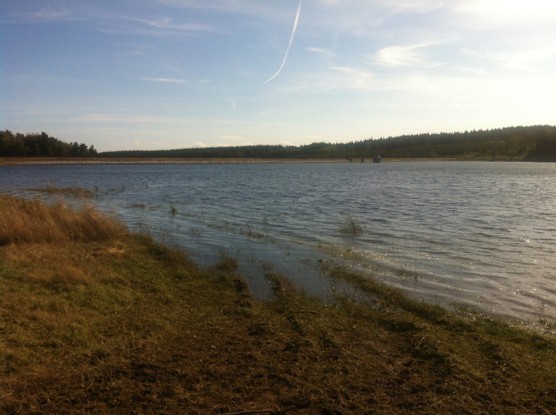
A water catchment is an area of land through which water from any form of precipitation (such as rain, melting snow or ice) drains into a body of water (such as a river, lake or reservoir, or even into underground water supplies – ‘groundwater’).
Catchment management protects and enhances water quality through good management of surrounding land.
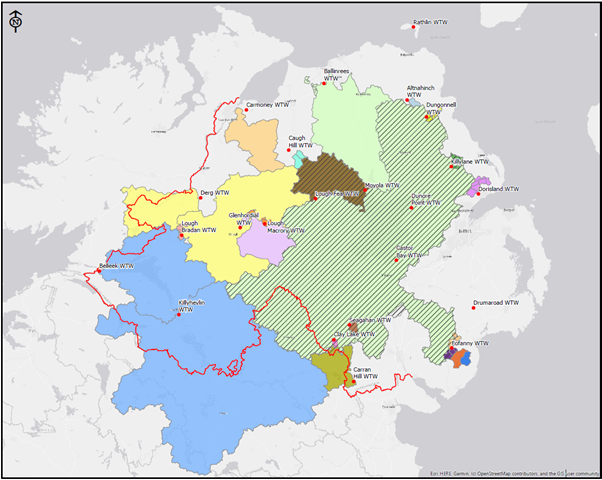
There are 25 drinking water catchments in Northern Ireland.
Our drinking water in Northern Ireland is abstracted from rivers, lakes and reservoirs and so it is important to protect these precious resources for our drinking water supply, as well as for biodiversity, habitat and farming.
Why is Catchment Management Important?
We describe the untreated water when we abstract it as ‘raw’ water. Everything that goes on in a catchment can affect the quality of water moving through that catchment. Catchment management aims to ensure that activities in our catchments have as little impact on raw water as possible. Water quality pressures and threats can come from domestic and commercial activities, our own wastewater assets, extreme weather events or agricultural activities. These practices can cause pollutants such as pesticides, sediment and nutrients to be washed into our rivers, lakes and groundwater. This is termed diffuse pollution.
Poor quality raw water can lead to difficulties during treatment and can incur significant cost. Whilst NI Water continually invest in improving the water treatment process at many of our 24 Water Treatment Works, we have formed strong partnerships with many other stakeholders who can help us to improve the quality of water at source from our 34 water abstraction points (rivers, lakes and reservoirs).
Raw water quality challenges we face in our catchments include:

- Windfarm construction and commercial forestry operations
- Peat and heath erosion, river bankside erosion and path erosion in upland catchments
- Some agricultural practices resulting in pollution risk like pesticides, excess nutrients from fertilisers, cryptosporidium risk from grazing animals and slurry run-off
- Wildfires on our land causing carbon and ash erosion
- Climate change leading to exetreme weather events like heavy rainfall or drought conditions.
Through a sustainable catchment management approach, NI Water are addressing these raw water quality issues ‘at source’ on the land and improving the quality of raw water before it goes through the treatment process. This ensures we continue to produce the highest quality drinking water for our customers. We call this our Sustainable Catchment Area Management Programme (SCaMP).
Our approach
Our Catchment Management Team aims to improve the quality and reliability of the water through sustainable catchment-based solutions that focus on protecting and enhancing the natural environment, through achieving favourable condition and habitat improvement.
If we improve the quality of water in our catchments before treatment, we can potentially save resource at the water treatment stage, which is good news for our customers and for our beautiful environment.
How do we do this?

We work hard to protect and enhance raw water quality and reliability in our drinking water catchments by using nature and natural processes where possible to clean water destined for our taps and encouraging best practice land management.
NI Water owns over 12,000 hectares of land in drinking water catchment areas and overall, there are over 1,000,000 hectares of land in drinking water catchments that can impact our raw water quality in NI.
We cannot change what happens in a catchment by ourselves and so we work in partnership with multiple other organisations on both our own land and on privately-owned land.
- We assess the risks to water quality in each of our catchments based on the land use, geology and topography, and by using the results from our catchment sampling and intensive monitoring programme at our raw water quality intakes. This helps us to prioritise our activities to deliver best value for money, target problem areas and work better with stakeholders and land managers.
- We conduct passive sampling and monitoring regimes at locations where pesticides are a particular issue, to understand the sources and to support landowners in implementing best practice.
- We seek and secure external funding to help us fund solutions through working in partnership with others.
- We aim to help landowners and managers by collaborating with them, discussing issues in the drinking water catchment and working together to improve the habitat and water.
Find out more
Where are our Drinking water catchments
What we do in our catchments
How you can help
 Related information